


Can Sports Massage Help Sciatica? A Soft Tissue Therapist's Guide


Sciatica is one of those terms that gets used loosely — often to describe any pain that runs down the leg. But understanding what's actually driving that pain is critical to choosing the right treatment. The good news is that many presentations labelled as 'sciatica' respond extremely well to soft tissue therapy, because the cause is muscular rather than structural.
What is Sciatica?

True sciatica refers to irritation or compression of the sciatic nerve, producing pain, numbness, tingling, or weakness that typically radiates from the lower back through the buttock and down the back of the leg. The most common structural causes are lumbar disc herniation compressing a nerve root, or spinal stenosis narrowing the spinal canal.
However, a significant proportion of presentations diagnosed as 'sciatica' are actually pseudo-sciatica — leg pain that mimics sciatic pain but originates from muscles and soft tissue rather than the spine. The most common culprit is the piriformis muscle.
Piriformis Syndrome — The Muscular Mimic
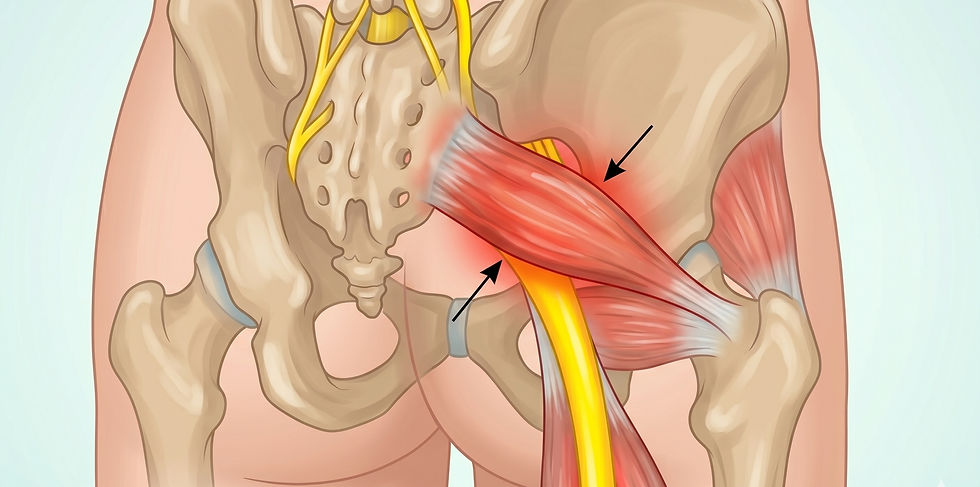
The piriformis is a small, deep muscle in the buttock through which the sciatic nerve passes — or in around 15% of people, through which the nerve actually runs. When the piriformis becomes tight, shortened, or develops trigger points, it can directly compress the sciatic nerve, producing leg pain that is clinically indistinguishable from disc-related sciatica.
This is highly significant because piriformis syndrome responds very well to soft tissue therapy — whereas structural disc pathology does not. Correctly identifying which mechanism is driving the pain can mean the difference between rapid recovery and years of frustration.
Other Muscular Causes of Leg Pain
Several other muscles can produce referred pain patterns that travel down the leg and are frequently misidentified as sciatica:
Gluteus minimus trigger points produce referred pain down the lateral and posterior leg — one of the most consistent sciatic mimics
Gluteus medius trigger points refer pain into the lower back and buttock, often mistaken for lumbar or SI joint pathology
Hamstring trigger points can produce pain down the posterior thigh that is easily confused with sciatic referral
Thoracolumbar fascia restrictions can refer pain and tightness into the lower limb through fascial continuity
How Soft Tissue Therapy Helps
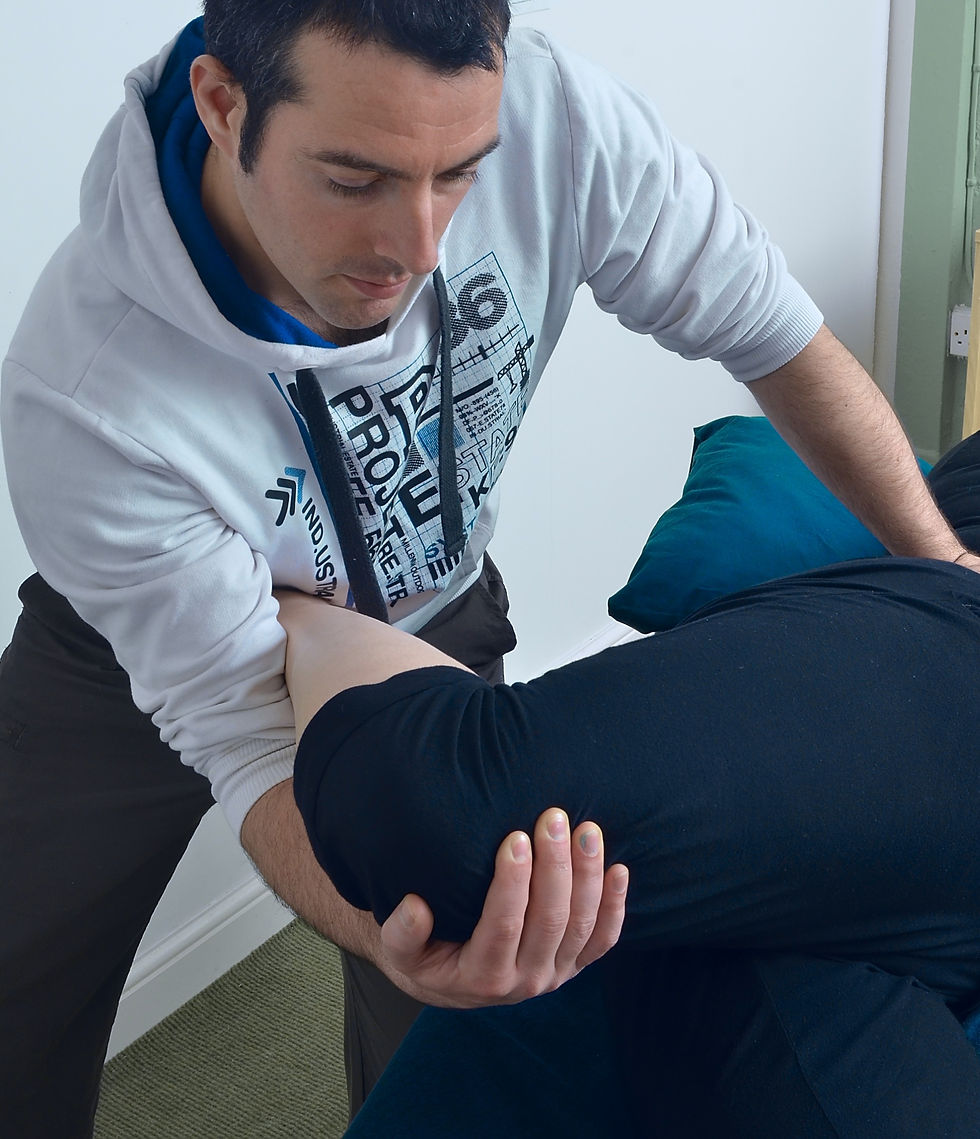
At Functional Body Clinic in Birmingham, the assessment process for leg pain includes orthopaedic testing to differentiate between structural and muscular causes. Where the presentation suggests muscular involvement, treatment typically includes:
Deep tissue work and trigger point therapy to the piriformis, gluteus minimus, and gluteus medius
Myofascial release to the thoracolumbar fascia and iliotibial band
Muscle energy techniques to restore hip external rotator length
Neural flossing (nerve mobilisation) techniques where appropriate to reduce neural tension
When to See a Medical Professional First
Certain presentations require medical investigation before soft tissue therapy is appropriate. These include significant neurological deficit (foot drop, bladder or bowel dysfunction, severe weakness), progressive symptoms, or pain following trauma. If you have any of these features, see your GP before pursuing manual therapy.
If you've been told you have sciatica and conventional approaches haven't resolved it, a thorough soft tissue assessment at Functional Body Clinic in Edgbaston may identify a muscular cause that responds to manual therapy. Book your initial assessment online today.



Comments